
Restoring Natural Flow at Burke Creek Ranch
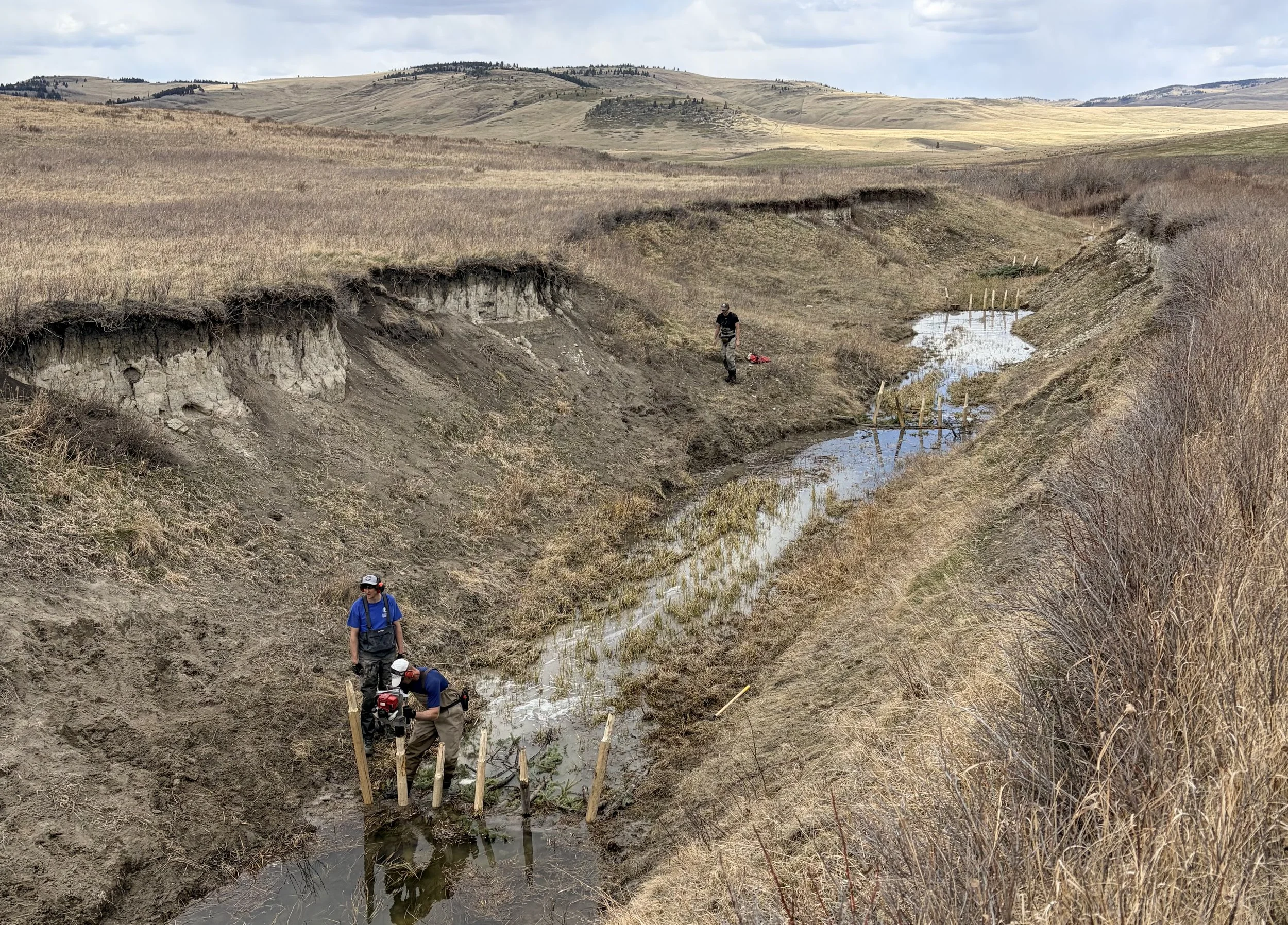
Volunteers building Beaver Dam Analogs in eroded creek
Creek Rehabilitation through Nature Based Solutions
After nearly 18 months of planning, partnerships, and preparation, we finally had the opportunity to put a shovel in the ground and begin an exciting conservation project at Burke Creek Ranch.
More than 80 years ago, a section of a creek that flows through a portion of our ranch was straightened by an ancestor. At the time, it would have been viewed as an improvement to the operation. Today, however, we understand much more about how natural systems function and the important role healthy waterways play in the landscape.
By removing the creek’s natural bends and meanders, water was forced to move faster through the channel. Over time, this increased flow caused significant erosion, degrading both the creek and the surrounding riparian area.
To help reverse that damage, we partnered with dedicated conservation organizations and experts, including Alberta Conservation Association, Waterton Biosphere Reserve, and Freshwater Conservation Canada. Funding support was provided through our Alberta Emerald Award project.
The restoration design uses a series of Beaver Dam Analogs (BDAs) and Post-Assisted Log Structures (PALS). These nature-based solutions are designed to slow water, reduce erosion, trap sediment, reconnect the creek with its floodplain, and create healthier habitat for wildlife and aquatic species. The results won’t be visible for several years, but within months we expect to see the beaver community move upstream to begin their work.
What makes this project especially meaningful is that it reflects how our understanding of land stewardship has evolved over generations. Actions that once seemed beneficial were based on the best knowledge available at the time. Today, we have the opportunity to learn from the past and work with natural processes rather than against them.
As ranchers, we depend on healthy ecosystems. Productive grasslands, clean water, resilient riparian areas, and thriving wildlife are all connected. Projects like this help ensure that the landscape remains healthy and productive for future generations. As a community education initiative we will be hosting a workshop for other ranchers and conservationists to boots to the ground learning in mid July. We are hopeful others will embrace and trial these types of projects on their land, and share their experiences.
We’re grateful to all of the partners, funders, biologists, contractors, and volunteers who helped bring this project to life. This is just the beginning, and we look forward to watching the creek heal and evolve in the years ahead.
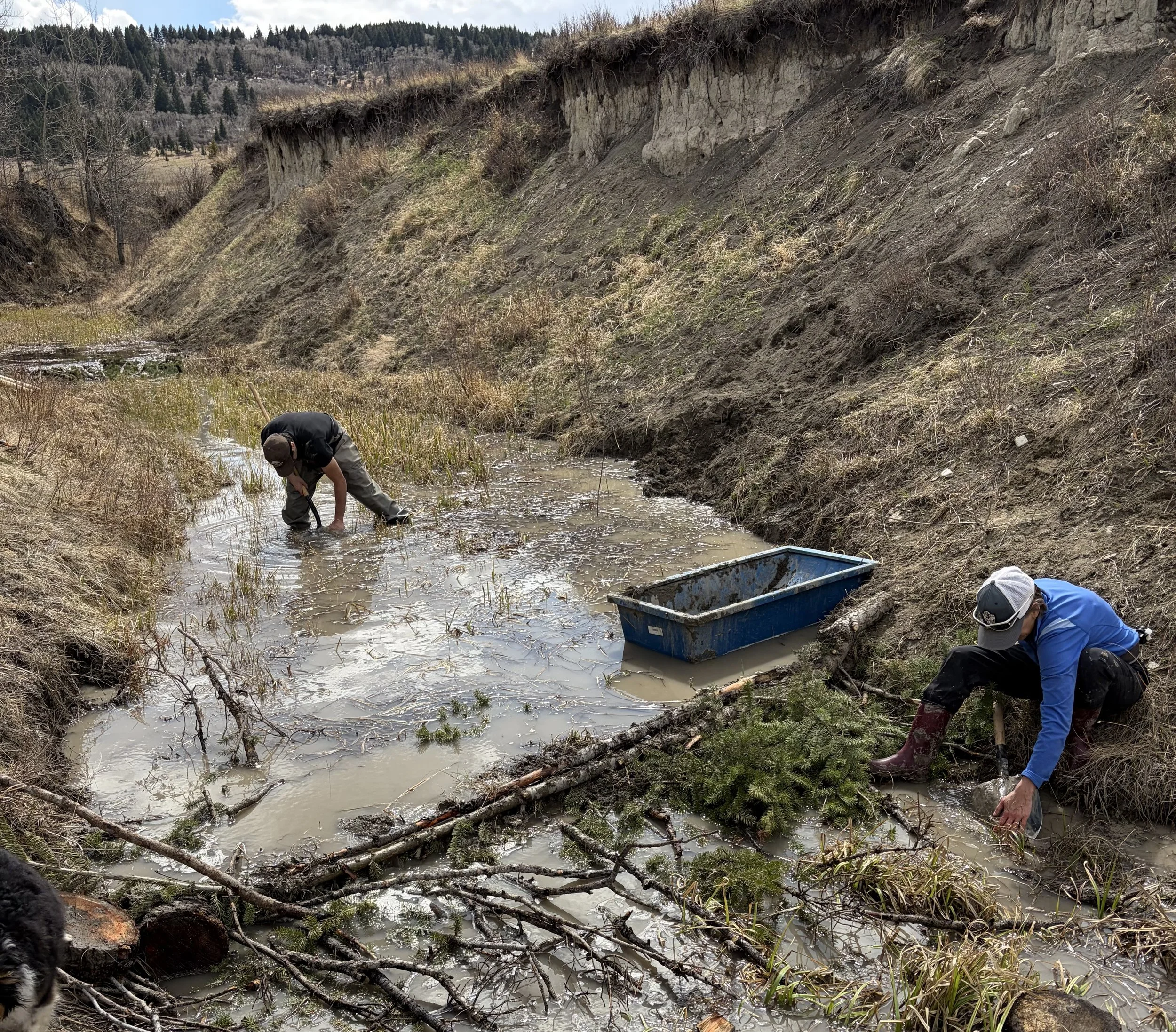
Using untreated posts and local slash and branches recovered from encroachment control
Standing in the creek last week, I couldn’t help but think about the generations of my family who have worked this land before me. More than 80 years ago, my great-uncle straightened this creek believing he was improving the ranch. Today, we understand these ecosystems differently, and we have the opportunity to help restore some of what was lost.
To me, that’s what stewardship is all about—not being perfect, but being willing to learn, adapt, and do better when we know better. After 135 years on this landscape, I’m proud that our family is still committed to that responsibility.